

Latest Posts
Start Your Construction Journey with Us!
Lorem ipsum dolor sit amet consectetur vulputate non purus
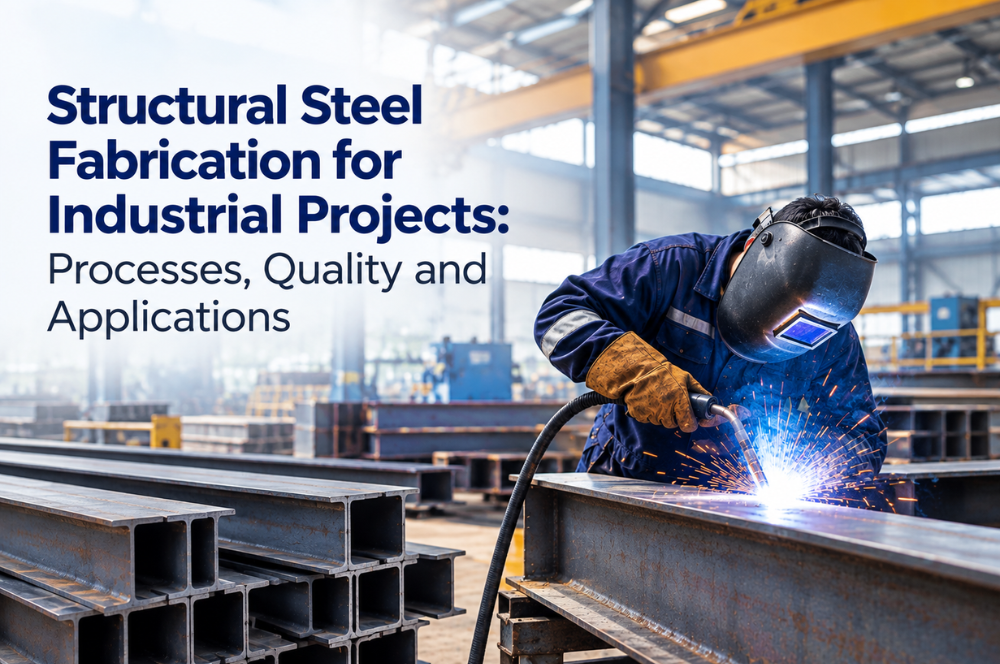
What Is Structural Steel Fabrication?
Structural steel fabrication is the process of converting raw steel sections, plates, and other materials into finished components according to approved engineering drawings. These components may include beams, columns, trusses, frames, supports, and connection plates.
The fabrication process requires accurate measurements, suitable machinery, skilled workers, and quality control at every stage. The finished components are generally transported to the construction site, where they are assembled and installed according to the structural design.
Key Processes in Structural Steel Fabrication
1. Design and Planning
The process begins with structural drawings, specifications, and fabrication requirements. Engineers and fabricators review dimensions, material grades, connection details, and load requirements before production begins. Proper planning helps reduce material wastage and prevents errors during fabrication and installation.
2. Material Selection and Cutting
Steel materials are selected according to the project’s structural requirements. Plates, beams, channels, angles, and other sections are measured and cut to the required dimensions. Modern cutting equipment such as CNC machines can improve precision and provide consistent results.
3. Drilling and Machining
After cutting, steel components may require holes, slots, and other details for bolted connections or additional fittings. Drilling and machining must be carried out accurately so that components align correctly during site assembly.
4. Welding and Assembly
Individual steel parts are positioned and joined through welding, bolting, or other approved connection methods. Welding requires controlled procedures and trained personnel because the quality of joints directly affects structural performance.
5. Surface Preparation and Coating
Once fabrication is completed, surfaces are cleaned to remove rust, oil, scale, and other contaminants. Protective coatings such as primers and suitable paint systems can then be applied to help protect steel from corrosion and environmental exposure.
6. Inspection and Quality Control
Quality inspection is carried out throughout fabrication rather than only at the final stage. Dimensions, welds, material specifications, surface preparation, and connections are checked against project requirements. Depending on the project, non-destructive testing may also be performed on selected welds.
Maintaining Quality During Steel Fabrication
Quality management starts with verifying the grade and condition of incoming steel. During production, fabricators check dimensions, joint alignment, welding quality, and connection details at appropriate stages. Completed components can also undergo visual inspection and, where required, non-destructive testing to identify possible defects.
Proper surface treatment is another important consideration, particularly for structures exposed to moisture and changing weather conditions. Applying an appropriate protective coating after adequate surface preparation helps reduce the risk of corrosion.
Maintaining inspection records and following approved fabrication procedures also creates better control over the manufacturing process. These practices can reduce rework, improve installation accuracy, and help ensure that the finished structure meets the project’s specifications.
Applications of Structural Steel Fabrication
Structural steel is widely used across different industrial sectors. Common applications include warehouses, factories, workshops, production facilities, storage structures, platforms, mezzanine floors, industrial sheds, and supporting frameworks.
Steel is particularly useful for projects requiring large column-free spaces and efficient construction. Its high strength-to-weight ratio allows engineers to develop practical structural systems while maintaining flexibility for future modifications.
Role of Experienced Fabricators
Experienced fabricators contribute to a project from material preparation through final inspection. They coordinate with engineers, contractors, and site teams to ensure that fabricated components match the approved drawings.
Companies working alongside steel building manufacturers in Karnataka may also provide integrated solutions for industrial buildings, including structural components, fabrication, finishing, and site-related requirements. Selecting a fabrication partner with suitable equipment, skilled manpower, and established quality procedures can help maintain consistency throughout the project.
Conclusion
Structural steel fabrication combines engineering, precision manufacturing, skilled workmanship, and quality inspection to produce dependable components for industrial construction. Careful planning, accurate cutting, reliable connections, corrosion protection, and systematic inspection all contribute to the performance and longevity of a steel structure. For industrial projects in the region, working with experienced structural steel fabricators in Belagavi and reliable structural steel fabricators in karnataka can support efficient fabrication and quality-focused construction.
