
Industrial PEB Warehouses in Karnataka
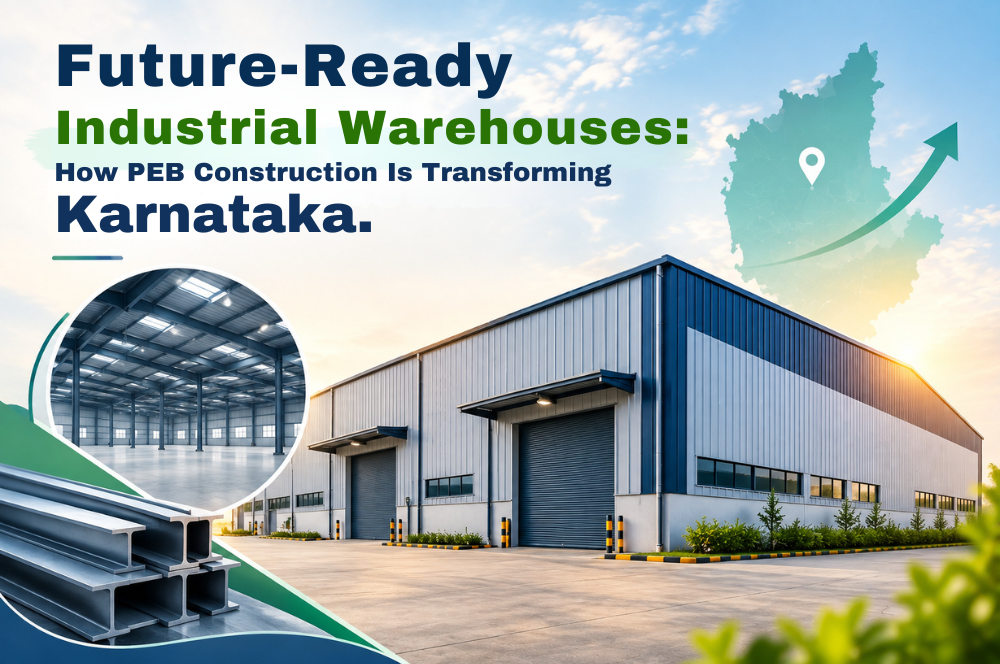
Karnataka has become a growing destination for manufacturing, logistics, distribution, and industrial businesses. As these sectors expand, companies need warehouses that can be constructed efficiently while providing strength, flexibility, and long-term value. Pre-Engineered Buildings (PEBs) are increasingly becoming a practical solution for meeting these demands.
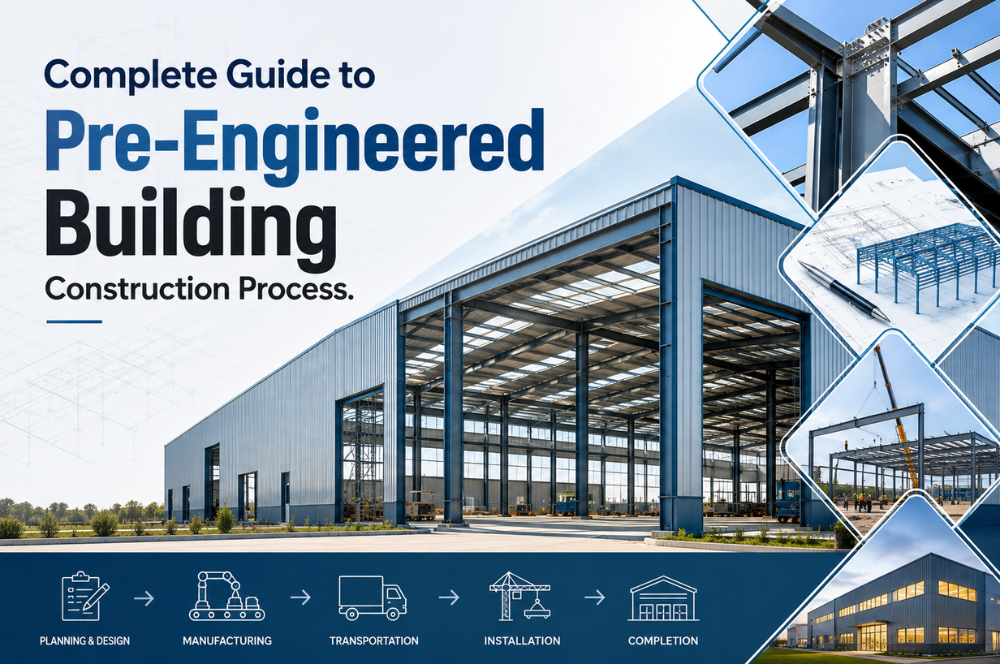
PEB structures are designed according to the specific requirements of a project, with major steel components manufactured in a controlled facility and assembled at the construction site. This method can simplify the construction process and help businesses develop functional industrial spaces within shorter project schedules.

Building Large, Flexible Spaces with PEB Technology

Modern warehouses often require considerable open space for storage racks, forklifts, machinery, loading operations, and movement of goods. Traditional structures may require several internal columns, which can restrict the efficient use of floor space.
PEB systems can be engineered to provide wide, open areas with fewer internal obstructions. The building can also be customised according to the operational requirements of the business. Features such as different building heights, crane systems, mezzanine floors, insulation, ventilation, and specialised roofing can be incorporated into the design.
This flexibility allows warehouse owners to create a facility that matches their current workflow instead of adapting their operations around a fixed building design.

Faster Project Execution with Factory-Fabricated Components

Time is an important factor in industrial construction. Delays can affect production schedules, storage capacity, business expansion, and overall project costs.
One advantage of PEB construction is that steel components can be fabricated at a manufacturing facility while foundation and site preparation work takes place simultaneously. Once the site is ready, the components can be transported and assembled systematically.
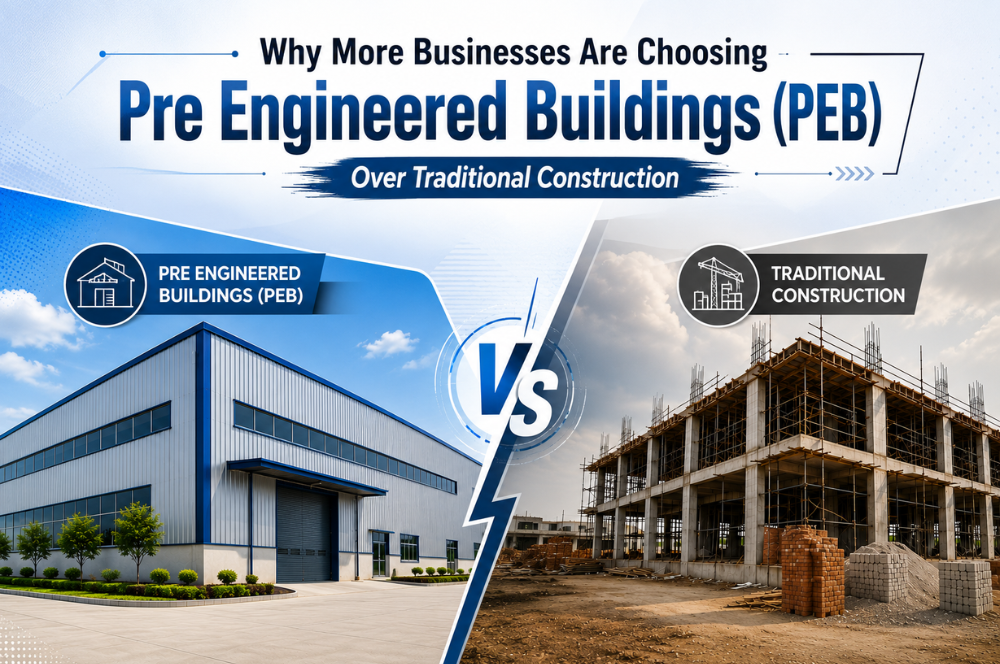
This parallel approach can help reduce the time required for structural work compared with some conventional construction methods. Faster completion also allows businesses to start using their warehouse sooner.

Supporting Karnataka's Expanding Industrial Infrastructure

The growth of industrial corridors, manufacturing units, logistics operations, and distribution networks across Karnataka is increasing the demand for efficient industrial buildings. Locations such as Bengaluru, Hubballi-Dharwad, Mysuru, Tumakuru, and Belagavi are seeing increasing requirements for commercial and industrial infrastructure.
For businesses planning industrial warehouse construction in Belagavi, PEB technology can offer a combination of structural strength, efficient space planning, and adaptability. The design can be developed around storage requirements, vehicle movement, loading areas, production activities, and possible future expansion.

Designing Warehouses That Can Grow with the Business

Industrial requirements rarely remain unchanged for many years. A company may eventually require additional storage bays, larger machinery, higher racks, or expanded dispatch areas.

A well-planned PEB can take potential future requirements into account during the initial design stage. This makes it easier to consider additional bays, extensions, or other modifications when the business expands.

Energy-efficient features can also be incorporated into the warehouse design. Insulated panels, natural daylighting, suitable ventilation, and provisions for renewable energy systems can help create a more comfortable and efficient working environment.

Important Factors Before Starting a PEB Project

Selecting the right building system is only one part of developing a successful industrial warehouse. Businesses should first understand their land conditions, building dimensions, storage requirements, equipment loads, crane requirements, drainage needs, insulation requirements, and future expansion plans.

The quality of engineering and fabrication also plays a major role. Businesses should evaluate the manufacturer’s experience, steel quality, structural design capabilities, fabrication standards, erection practices, safety procedures, and after-sales support before making a decision.

A properly engineered structure can provide better performance and reduce the possibility of costly modifications later.

Conclusion

PEB construction is giving Karnataka’s industrial sector a more adaptable approach to warehouse development. Faster assembly, efficient use of space, customisable designs, and the ability to plan for future expansion make PEBs suitable for a wide range of industrial applications.

For businesses investing in Industrial PEB Warehouses in Karnataka, careful planning and professional engineering can help create facilities that support both present operations and future growth. Likewise, steel warehouse construction in karnataka can provide a strong and scalable foundation for businesses looking to build efficient industrial infrastructure.